The path to useful AI is to scale in-context continuous learning that works with any model, any harness, and for all the varieties of use cases. As open-source model adoption grows and the world becomes even more multi-model, learning and memory should be separated from the model providers and be highly interoperable (hence in-context!).
Pre-training and post-training, scaling on data and compute, will continue to push models’ intelligence, but will not enable them to learn and improve in real time.
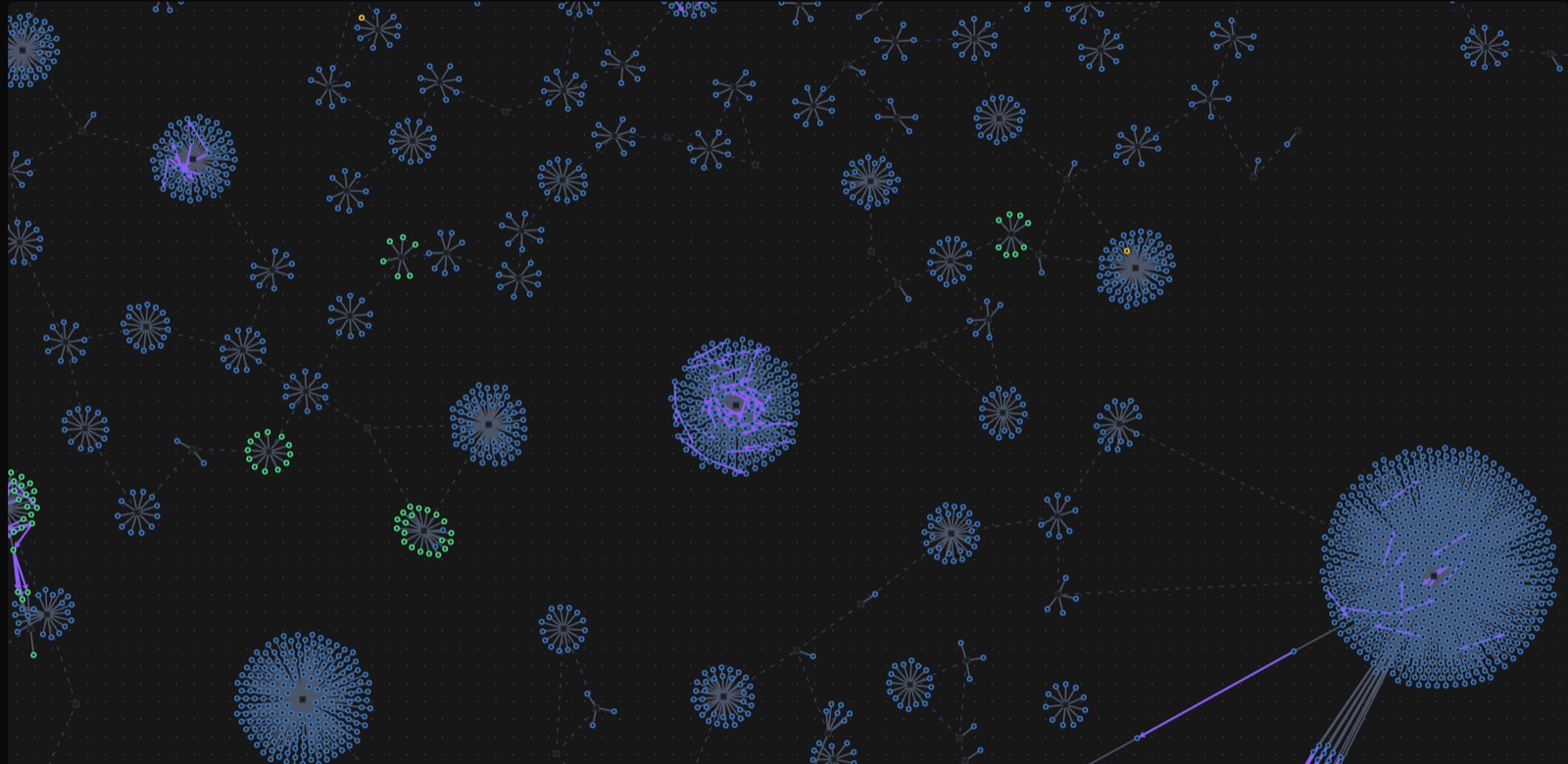
Our model learner-1 helps any model continuously improve by extracting and dreaming on the context of any user, task, or tenant, and putting it on our vector-graph database. This is then brought to the model by injecting tokens into its context in real time.
supermemory
fileschatsurlsraw datalearner-1memory dbv12v13updatemergeinferforgetprior memories in contextprior memoriesinject via hooksyour agent's contextor
Figure 1. Raw data enters supermemory. learner-1 updates, merges, infers and forgets against the memory db, and the result is injected into your agent’s context.
What we do
Memory that keeps learning.
learner-1 extracts and dreams on the context of every user, task, and tenant, stores it in a vector-graph database, and brings it back to the model by injecting tokens into its context in real time.
Any model, any harness.
Learning and memory live outside the model providers, so they carry across models and harnesses and stay interoperable, in context, and yours.
The hard infrastructure, done.
Dense, interconnected, growing learnings with an understanding of time, already serving 100k+ organizations and over a trillion tokens a month.
Scale and Enterprise include advanced document extraction for PDFs, with OCR and descriptions of figures and diagrams. Free, Pro and Max keep standard PDF extraction. Explore document support.
Per-question token cost across 5 to 9,988 files (log scale). Markdown memory grows ~7× over the range; supermemory grows ~4×. The 299-file corpus is a notable outlier where Markdown memory thrashes. n = 220 (fs) + 220 (smfs) trials · smfs.ai/research/runs
supermemory local: free, up to 10,000 stored documents
Enterprise security.
supermemory is SOC 2 Type II certified, with a HIPAA BAA on Scale and Enterprise and GDPR compliance. We will sign your contracts and DPA, and deploy air-gapped where the data cannot leave at all.
supermemory is a memory API for AI agents and apps. It gives any model long-term memory: it extracts memories from conversations, documents and files, keeps a profile for each user, and brings the right context back when the model needs it. It is available as an API with TypeScript and Python SDKs, as plugins for coding agents, and as an MCP server.
How is agent memory different from RAG or a vector database?
A vector database stores embeddings and returns the nearest ones; what to store, update and delete is left to you. supermemory manages the memories themselves: it extracts facts, updates them when they change, forgets what has expired and keeps a profile for each user. It also does retrieval over your documents (SuperRAG), so there is no vector database to run.
Which models, agents and frameworks does supermemory work with?
Any model. There are SDKs for TypeScript and Python and a REST API; plugins for Claude Code, Cursor, Codex, OpenCode, OpenClaw and Hermes; an MCP server for Claude, ChatGPT and other MCP clients; and integrations for the Vercel AI SDK, LangChain, LangGraph, CrewAI, the OpenAI SDK, Mastra, Pipecat, LiveKit, Zapier and n8n.
Can I self-host supermemory?
Yes. supermemory local is a free self-hosted binary for up to 10,000 stored documents; it runs on your machine and is not open source. Running supermemory in your own cloud or on a dedicated instance is available on Scale and Enterprise, and Enterprise also supports fully air-gapped deployments, where LLM inference may be the only outbound call, or none at all.
Is supermemory open source?
Partly. The main GitHub repository, including the MCP server, and the plugins are MIT, and the TypeScript and Python SDKs are Apache 2.0. The memory engine is not open source: it runs in our cloud, as the free supermemory local binary, or in your own infrastructure on Scale and Enterprise.
How much does supermemory cost?
The Free plan includes $5 of credits every month. Paid plans start at $19 a month, and usage is billed at the same rates on every plan.
We’re a small team based in San Francisco, building the memory layer for every model and every harness. If that is the problem you want to spend the next few years on, we would like to hear from you.
One of the things missing from today’s systems is the ability to online learn and continually learn. So, you know, we train these systems, we balance them, we post-train them, and then they don’t continue to learn out in the world like we would.
Reference 02
AI will transform every industry, power every company, and be built by every country. Open models strengthen safety and cybersecurity, accelerate innovation and diffusion, and enable sovereign AI. The world needs both frontier closed models and frontier open models.
 ChatGPT
 Claude
 Grok