Memories that remember each other
A living knowledge graph that automatically extracts facts, builds relationships, and forgets what's no longer relevant. No manual tagging, no cleanup, no stale data.
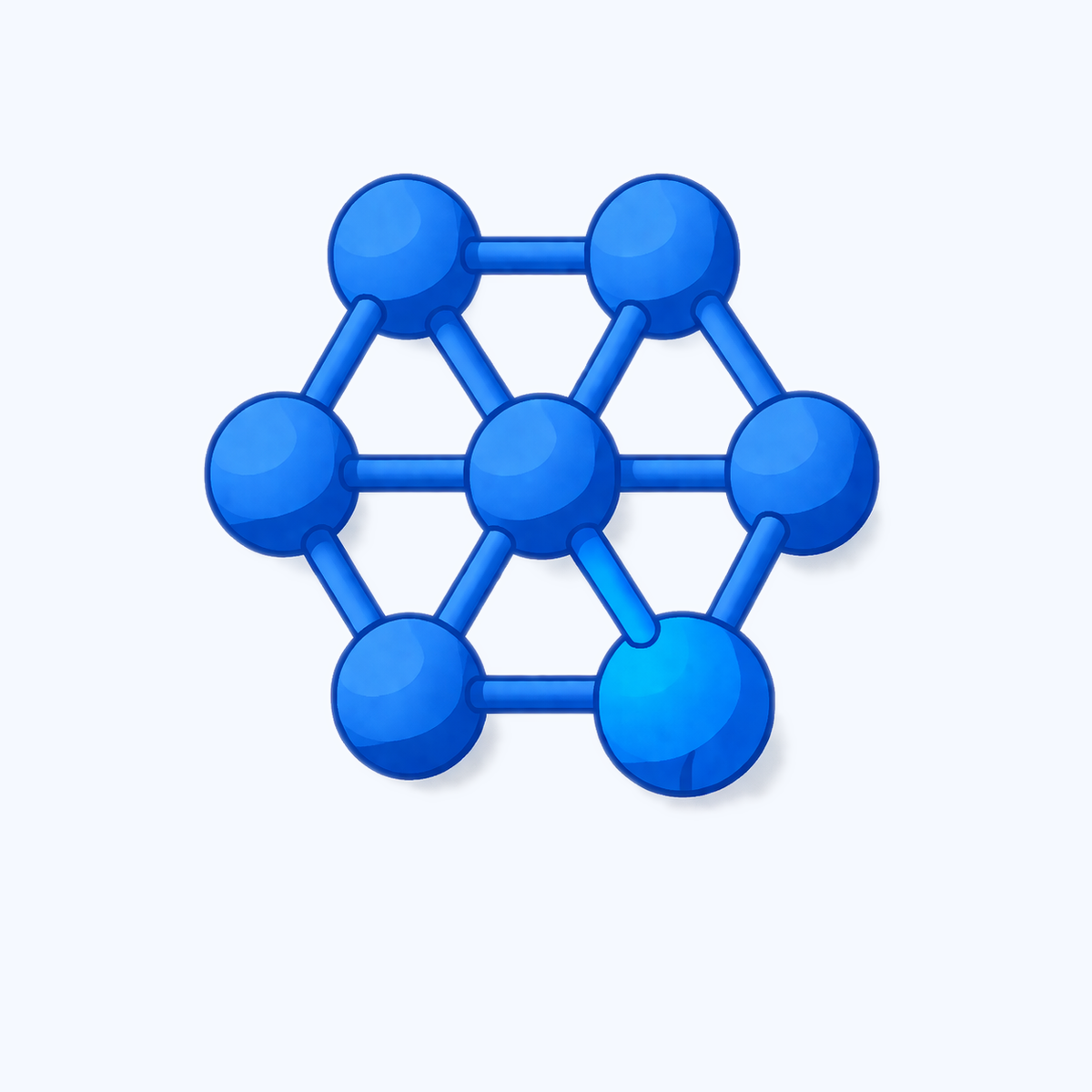
Triplet graphs don't scale
Traditional knowledge graphs store everything as subject-predicate-object triplets. Connecting and traversing those paths is slow, inefficient, and expensive at scale.
Supermemory takes a fundamentally different approach. Learn how it works →
Triplet overhead
Traditional graphs decompose every fact into subject-predicate-object triplets. A single piece of knowledge becomes dozens of nodes and edges that must be traversed one hop at a time.
Slow at scale
Path traversal across triplets gets exponentially slower as the graph grows. Multi-hop queries that are fast at 1K nodes become unusable at 1M.
Expensive to run
Sparse triplet storage means more nodes, more edges, and more compute per query. Infrastructure costs scale with graph complexity, not with the amount of actual knowledge.
Add content. The graph builds itself.
Extract
From a single conversation, Supermemory extracts multiple atomic facts — each one a standalone memory.
Connect
Each new fact is automatically linked to existing memories through Updates, Extends, or Derives relationships.
Evolve
The graph stays current automatically. Outdated facts are superseded, temporary memories expire, contradictions resolve.
Three ways memories connect
Updates
Information changes
Memory 2 updates Memory 1. Searches return the latest information while preserving history.
Extends
Information enriches
Memory 2 extends Memory 1. Both remain valid — searches get richer context.
Derives
Information infers
Supermemory derives new insights from patterns — surfacing knowledge you didn't explicitly state.
Every memory has a type
Supermemory classifies memories automatically. Each type has different persistence and retrieval behavior.
Facts
"Alex is a PM at Stripe"
Persists until updated
Preferences
"Alex prefers morning meetings"
Strengthens with repetition
Episodes
"Met Alex for coffee Tuesday"
Decays unless significant
Automatic forgetting, built in
Zero manual work
All of this is automatic. You don't:
Just add content and search
Build a memory that evolves
Memory Graph is available on all plans